⚡ Quick Answer
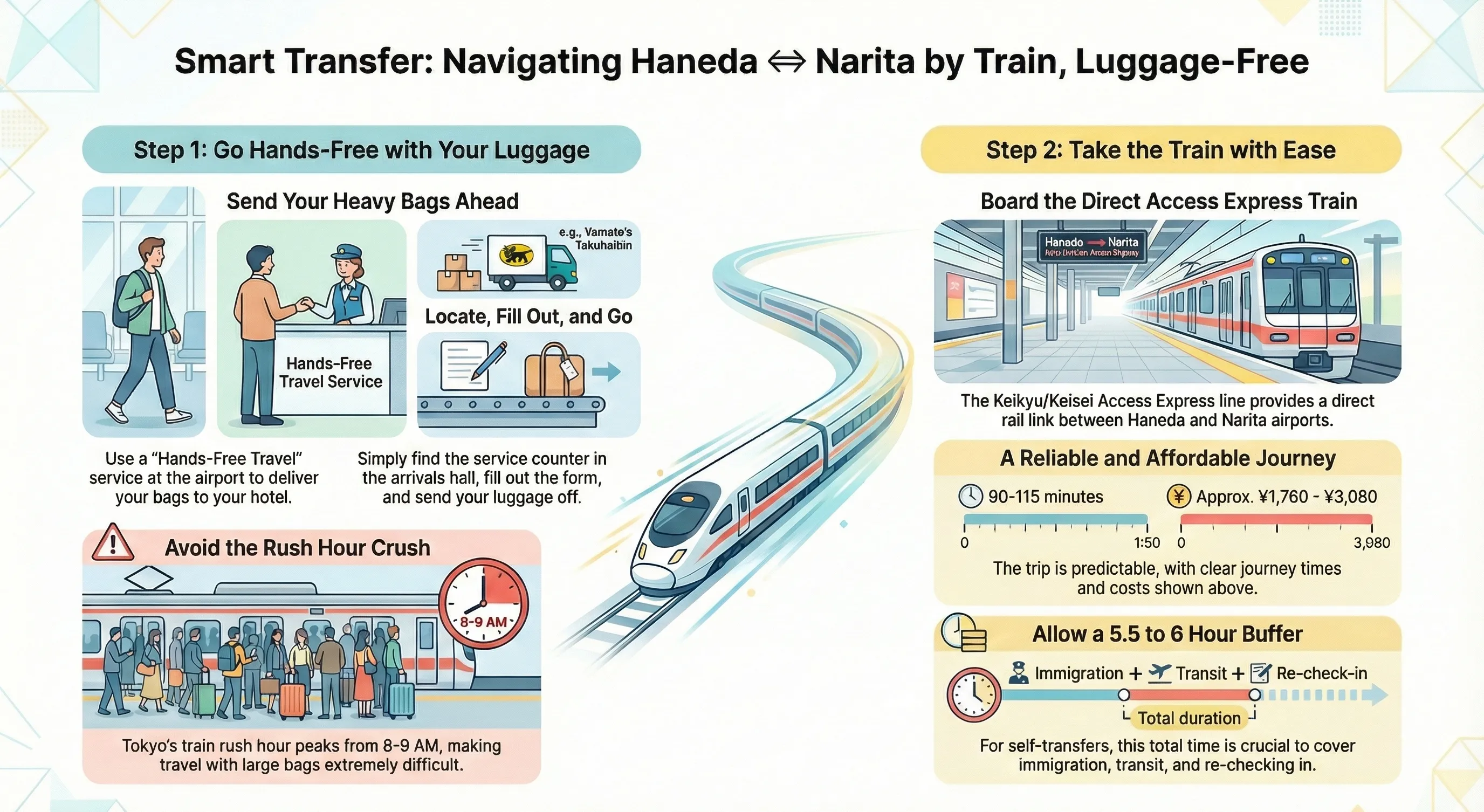
Best method for separate ticket connections: Take the train (90-115 min, ¥1,760-3,080) and forward your luggage with Yamato Transport (¥2,000-3,000/bag). Your bags go to your hotel while you travel light.
Total time needed: Minimum 5.5-6 hours between landing and departure for safe connections.
Can't risk delays? Book a private transfer (¥25,000-35,000) for guaranteed timing.
What you need to know about airport transfers in Tokyo
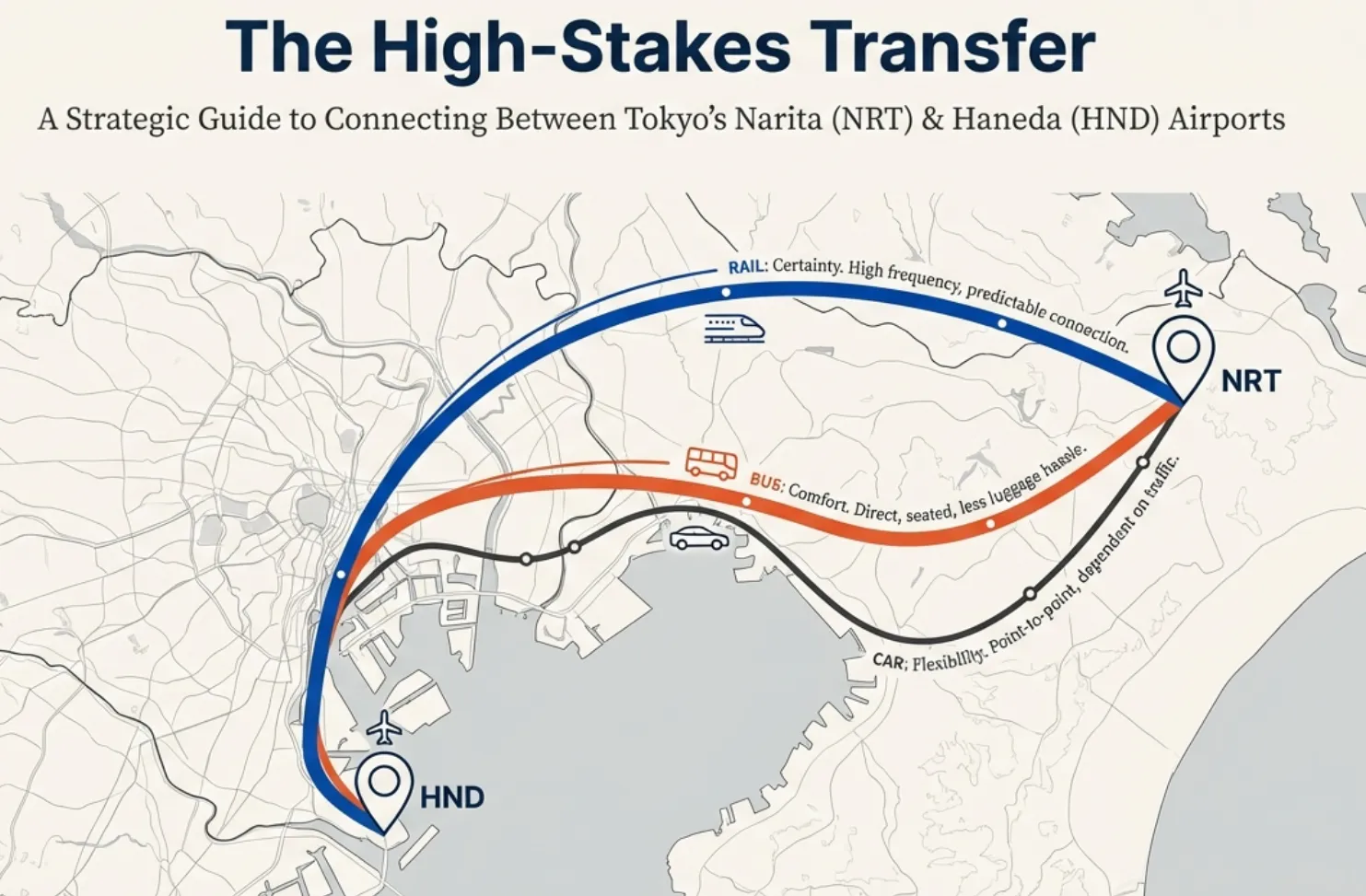
The transfer between Tokyo's two international airports—Haneda (HND) and Narita (NRT)—covers over 70 kilometers. It's a significant journey that forces a tough choice: take the predictable train but struggle with luggage, or choose the comfortable bus and risk Tokyo's unpredictable traffic.
Here's the good news: there's a smarter way. By using Japan's excellent luggage forwarding services (known as takuhaibin or baggage delivery service), you can have both the train's reliability and the freedom of traveling hands-free for your inter-airport transfer Tokyo connection. This separate ticket connection Haneda Narita strategy is the secret many experienced travelers use. Let me show you how this works.
Important things to watch out for
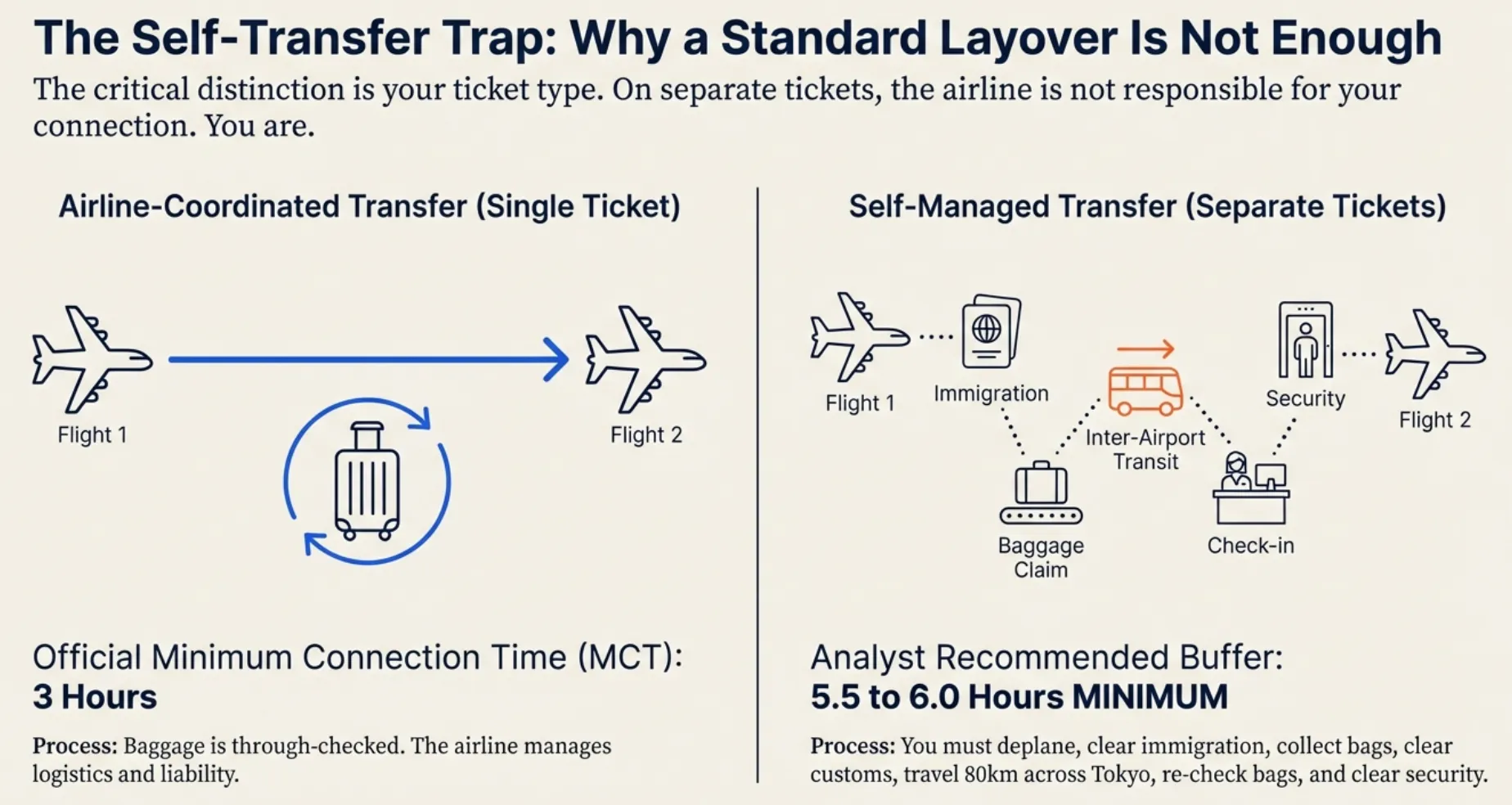
If you're making this transfer on separate airline tickets, you need to understand the risks. When your flights aren't on a single booking, you're responsible for making the connection—the airlines won't help if something goes wrong.
Allow enough time
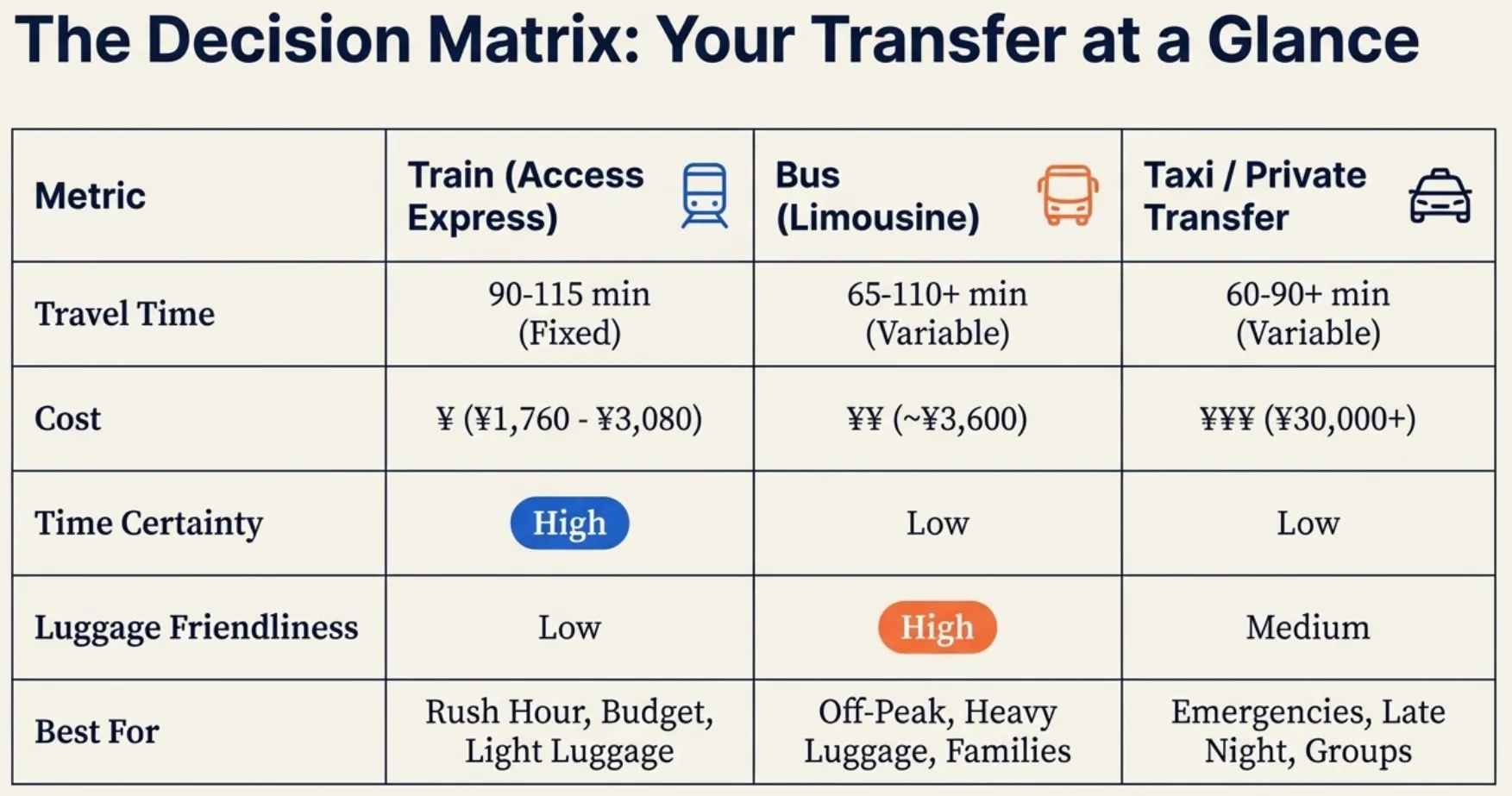
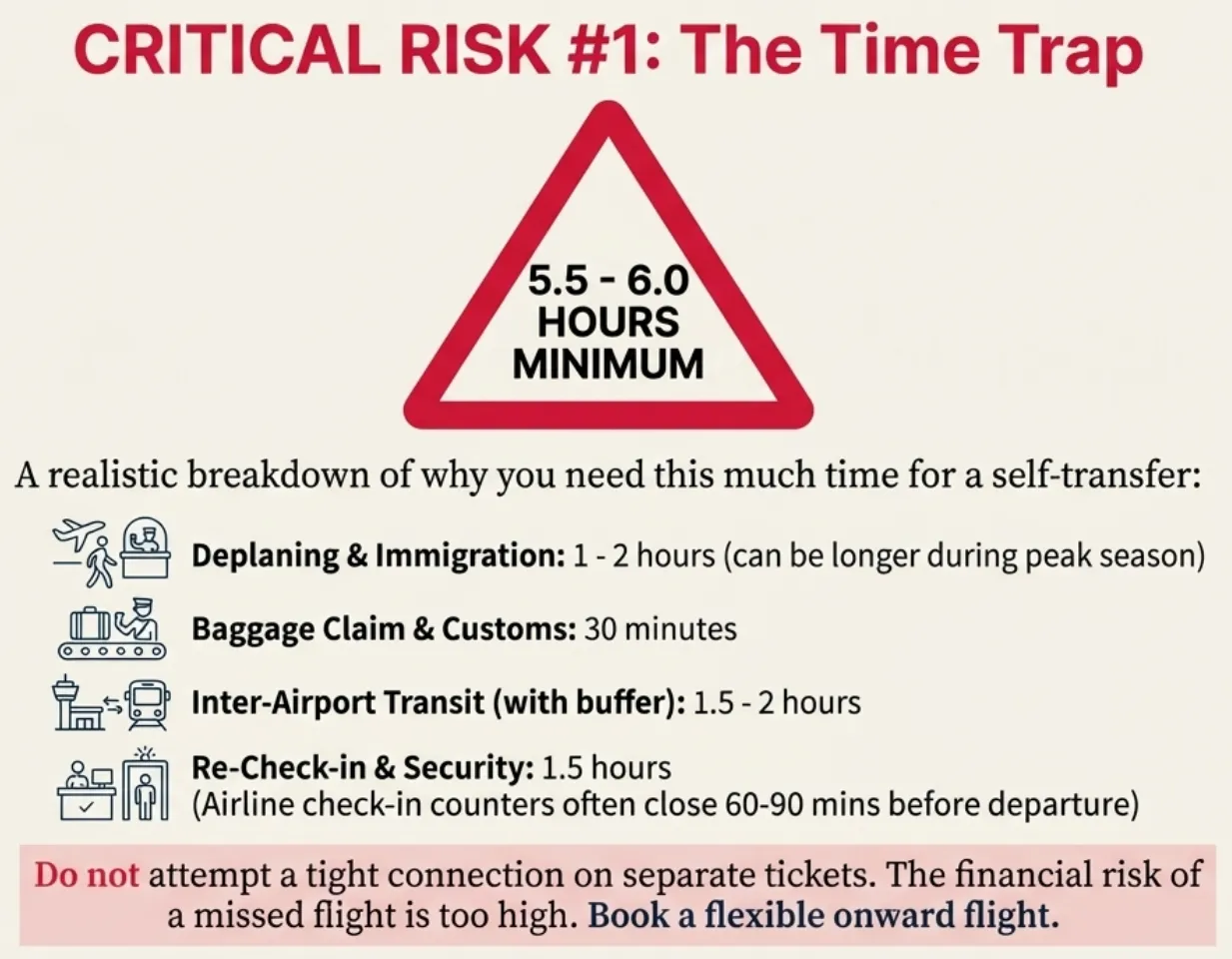
While airlines require a minimum of 3 hours for single-ticket connections, you'll want 5.5 to 6 hours minimum connection time Haneda Narita when you're managing this yourself on separate tickets inter-airport transfer. This buffer absorbs potential delays from immigration queues (up to 2 hours during peak season), baggage claim waits, and the 70km journey between airports Tokyo.
You must enter Japan
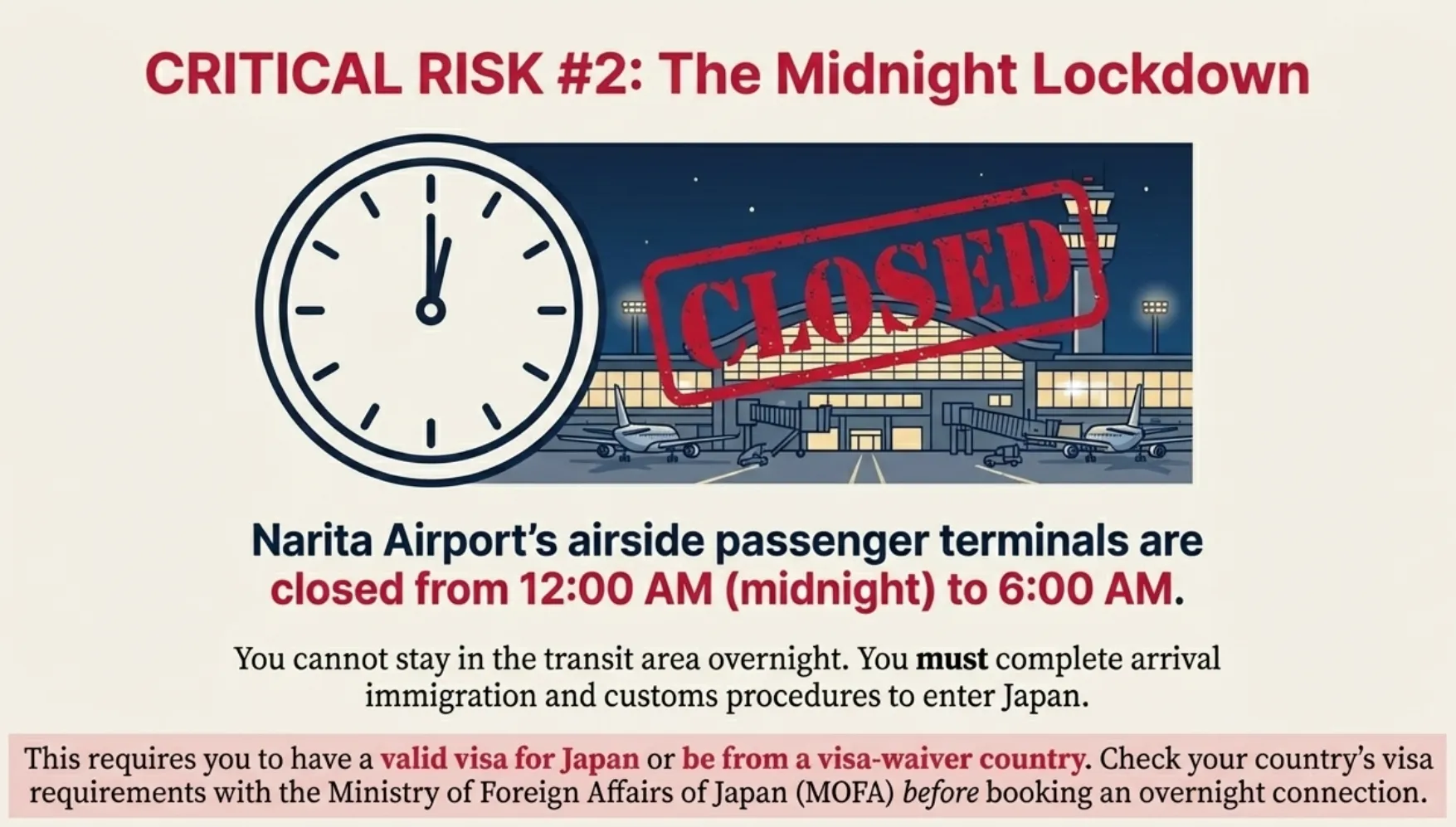
This isn't an airside connection—you need to go through Japanese immigration. Make sure you have the right visa or check that your country is eligible for visa-free entry. This is non-negotiable.
You'll handle your bags twice
On separate tickets, your luggage won't transfer automatically. You'll collect your bags at the first airport, transport them yourself, and re-check them at the second airport. You'll need to arrive at your departing airline's counter at least 60 minutes before your flight leaves.
Peak season can add hours
During busy tourist seasons, immigration lines at Narita have stretched beyond two hours. Factor this into your planning, especially if you're arriving during Japanese holidays or peak travel months.
Comparing your transfer options
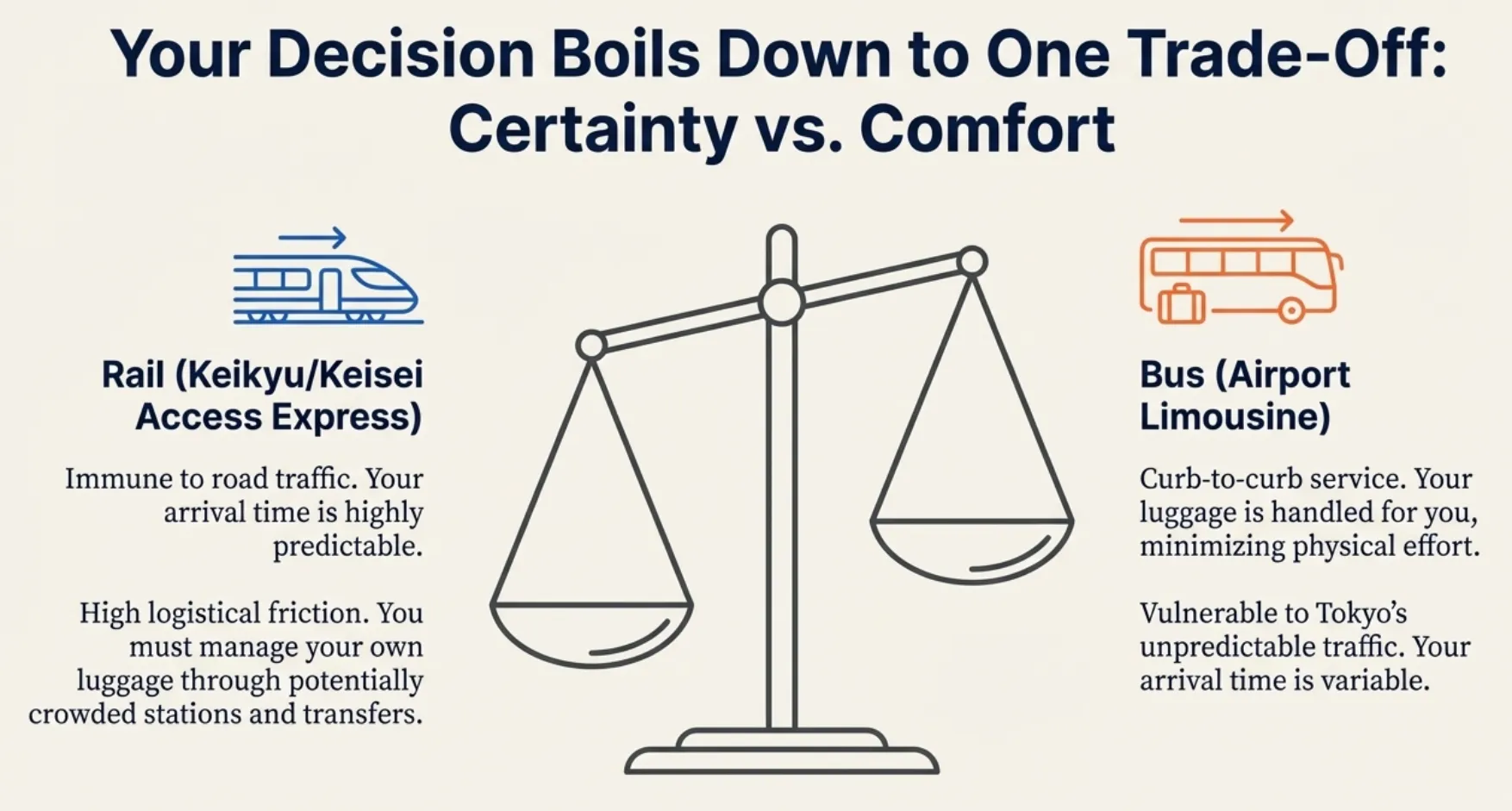
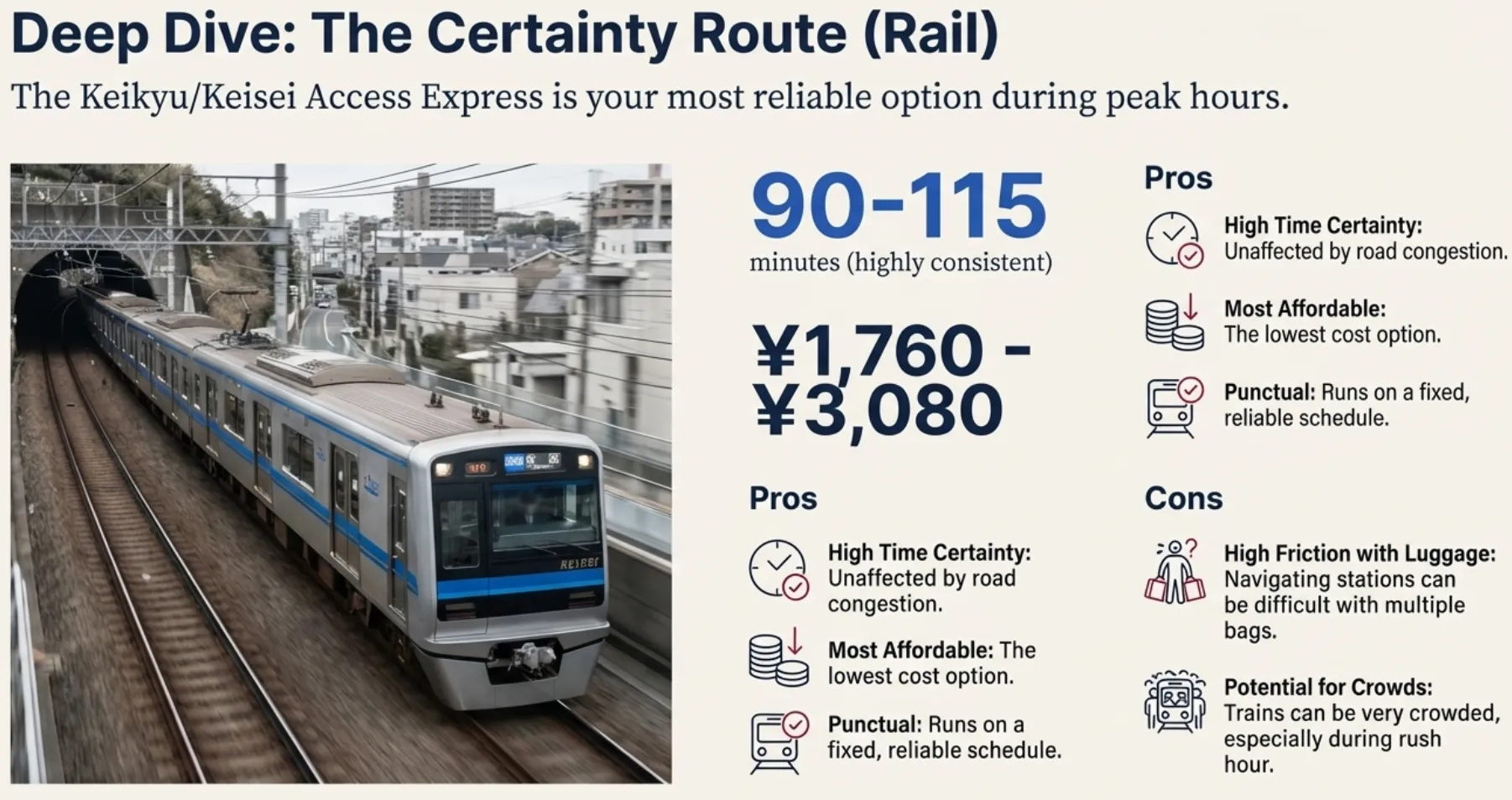
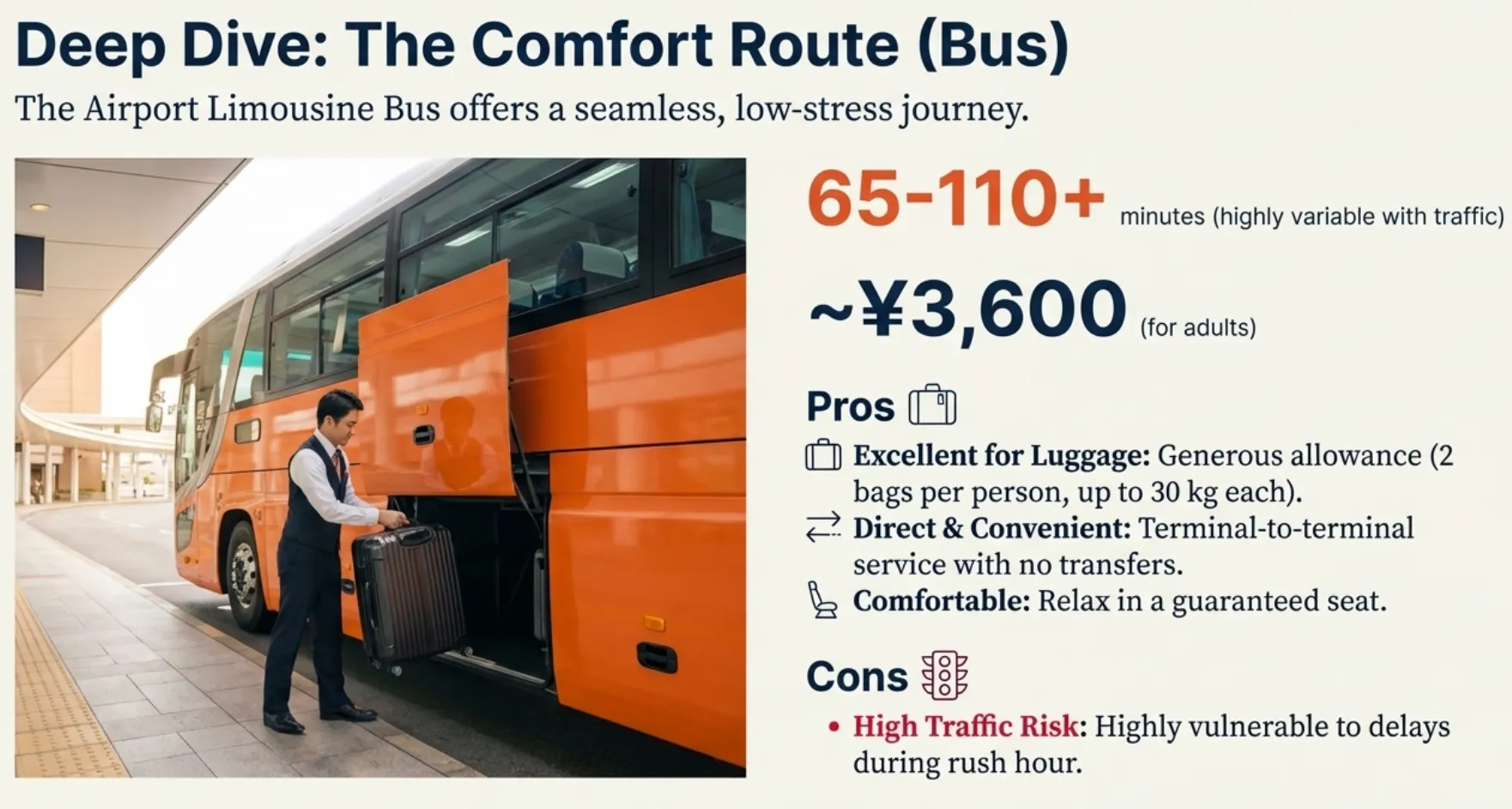
Let's look at what you're actually choosing between. The decision comes down to a fundamental trade-off: predictable travel time versus ease of handling luggage.
💰 Calculate Your Transfer Cost
Adjust the sliders to see costs for different options:
If time is extremely tight or you're traveling with young children, consider booking a private Haneda airport transfer to Tokyo to handle the first leg, then forwarding your luggage to your final destination while you take the train to Narita.
The smart approach: travel luggage-free
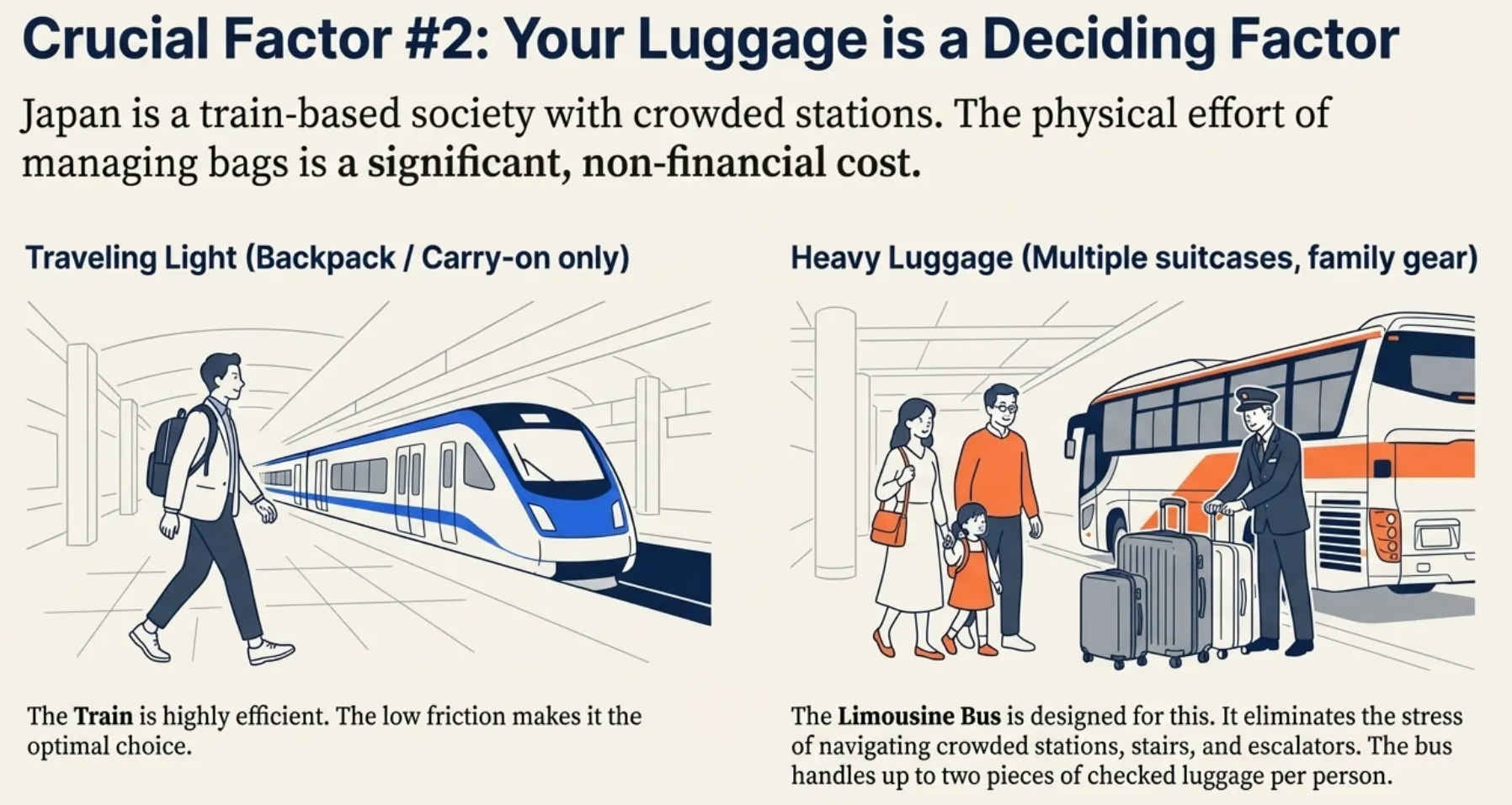
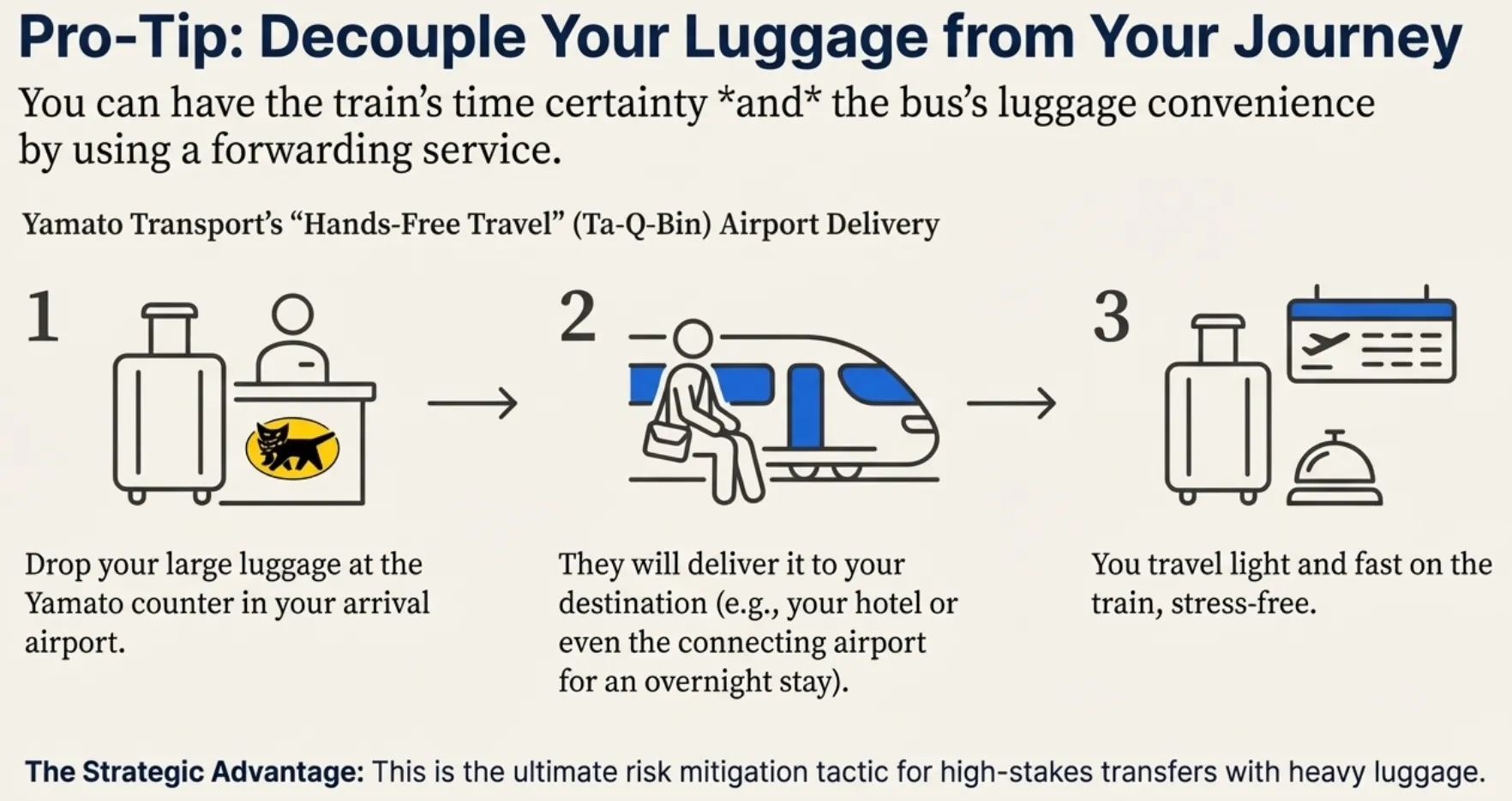
Here's what changes the game: you don't need to carry everything with you. By using Japan's luggage forwarding services (like Yamato Transport's Ta-Q-Bin), you can send your heavy bags ahead while you travel light between airports.
How this works in practice
For same-day connections: You carry just essentials between airports while your large suitcases go directly to your final destination hotel in Japan. They'll be waiting when you arrive.
For overnight connections: Forward your bags to your airport-area hotel or to the airport itself for next-day pickup. You move around Tokyo unencumbered, then collect everything before your flight.
Using the luggage forwarding service
After clearing customs at Haneda or Narita, find the Yamato Transport luggage counter (also called TA-Q-BIN airport service) in the arrivals hall. This airport baggage forwarding Japan service is incredibly efficient. Fill out a delivery form with your destination address, pay the fee (typically ¥2,000-3,000 per large suitcase), and hand over your bags. That's it—you're now free to move around with just a small carry-on for your Haneda Narita transfer time.
For overnight stays, Yamato offers same-day delivery to hotels in Tokyo's 23 wards. Your bags will be at your hotel when you check in. For destinations further away (like Sapporo or Osaka), delivery takes 1-2 days.
Why this strategy works
- No physical strain: Navigate stations, staircases, and crowded trains with just a small bag. It's comfortable and stress-free.
- Maximum reliability: Use the train's predictable schedule without worrying about managing heavy luggage. This matters especially during rush hours.
- Safer and easier: Keep your hands free to check your phone, help your kids, or manage your documents. You're less likely to lose track of things.
"The luggage forwarding tip saved our entire trip! We sent our four big suitcases to our hotel in Kyoto and traveled light on the train between airports. No stress, no heavy lifting, and we made our connection with time to spare. Wish I'd known about this strategy years ago!"
— Sarah M., Los Angeles, CA 🇺🇸
Your step-by-step transfer guide
Let me walk you through exactly what you'll do, from landing at your first airport to checking in at your second.
Step 1: Clear immigration and customs
When you deplane, head straight to immigration. Don't dawdle—during peak times, this queue can take two hours. Have your passport and landing card ready. After immigration, collect your checked bags and proceed through customs into the arrivals hall.
Step 2: Forward your non-essential luggage
Once in the arrivals hall, locate a Yamato Transport counter. Decide what you'll carry (one small bag with essentials, valuables, and electronics) and what you'll forward (large suitcases, bulky items). For comprehensive details on all baggage service locations, operating hours, and fees at Haneda, see our Haneda Airport essential services guide.
Want to master the entire luggage forwarding process? Our complete Haneda Airport luggage forwarding guide covers same-day delivery options, how to fill out the waybill form, exact costs by destination, prohibited items, and pro tips for late-night arrivals and airport pickups.
Important: Keep all valuables, passports, money, credit cards, laptops, cameras, and mobile batteries with you. Never forward these items. Fill out the form with your destination address, pay, and hand over your bags.
Step 3: Navigate to the train platform
Now that you're traveling light, follow signs to the train station. At Haneda, you'll take the Keikyu Line. At Narita, you'll use the Keisei Line. The stations are integrated into the airport terminals—well-marked and easy to find.
Step 4: Take the inter-airport train
Look for through-service trains connecting both airports—usually via the Keisei Narita Skyaccess Line continuing onto the Keikyu Airport Line for the Haneda to Narita direct train route. True direct service runs only a few times daily, so you might need to change trains once at Shinagawa or another interchange station. The HND to NRT train journey takes 90-115 minutes, making it the most reliable option during Tokyo rush hours.
Want to compare all your Haneda transfer options including trains, buses, and private services? We've got a detailed comparison guide.
Essential timing and schedule tips
Calculate your buffer time
For separate-ticket connections, 5.5 to 6 hours minimum between your landing time and departure time. This isn't optional—it's the realistic amount of time you need to absorb delays and complete the journey safely.
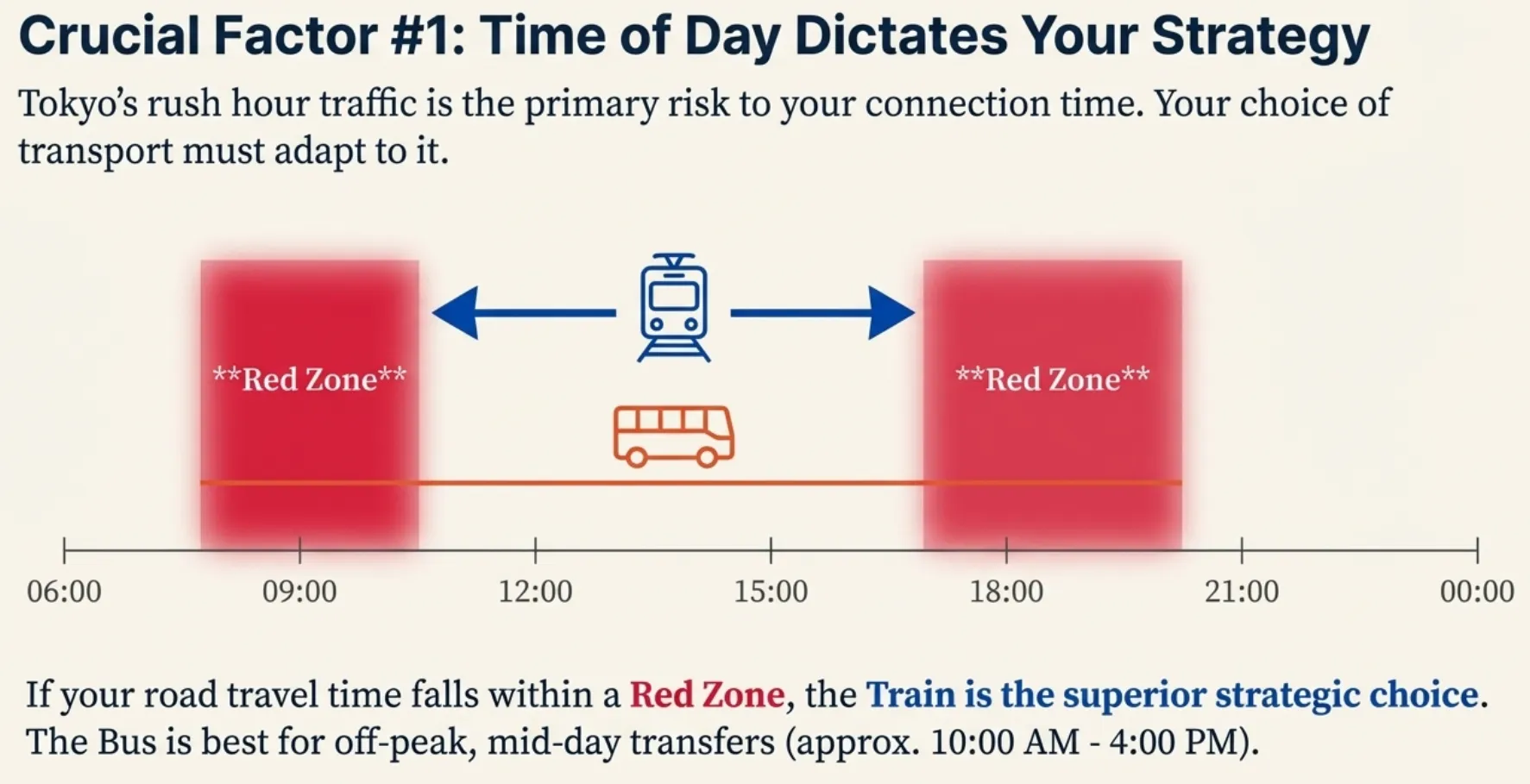
Avoid rush hour if possible
Tokyo's rush hours are serious: 7:30-9:30 AM and 4:30-7:00 PM. If your transfer window falls during these times, the train is your only reliable choice. The bus can get stuck in traffic for 90+ minutes during peak congestion.
Watch the midnight cutoff
Almost all public transport stops around midnight. If you land late, you'll need a taxi (¥30,000+) or a private Haneda airport transfer service that you've booked in advance.
Narita's overnight rules
Narita Airport closes its airside terminals from midnight to 6 AM. If you have an overnight connection, you must exit through immigration—you cannot stay in the transit area. This makes having proper entry documentation essential.
Your final pre-travel checklist
Before you leave home, verify these critical details that can make or break your connection.
Visa and entry requirements
Confirm your visa status for Japan. This transfer requires formal entry into the country. Check with the Japanese embassy or consulate well in advance—don't leave this until the last minute.
What to keep with you
Your carry-on should contain all valuables, travel documents, essential medications, a change of clothes, and any electronics you'll need. If you're forwarding luggage, pack this carefully—you won't see your main bags again until they reach your destination.
Understanding the costs
Budget for luggage forwarding (typically ¥2,000-3,000 per large bag), train fare (¥1,760-3,080), and any meals or incidentals during the transfer. Having yen cash helps, though most airports accept credit cards.
When a private transfer makes more sense
While the luggage-forwarding-plus-train strategy works brilliantly for most travelers, sometimes a direct private transfer from Haneda is the smarter choice.
Consider private transfer if:
- You have less than 6 hours between flights and need guaranteed timing
- You're traveling with very young children or elderly family members
- You have unusual luggage that can't be forwarded (live animals, extremely valuable items)
- Your connection window falls during peak rush hour and you want door-to-door service
- You're on a business trip and can expense the convenience
A private driver eliminates all navigation stress, handles luggage throughout, and guarantees timing regardless of traffic conditions. For groups of 3-4 people, the per-person cost becomes very reasonable.
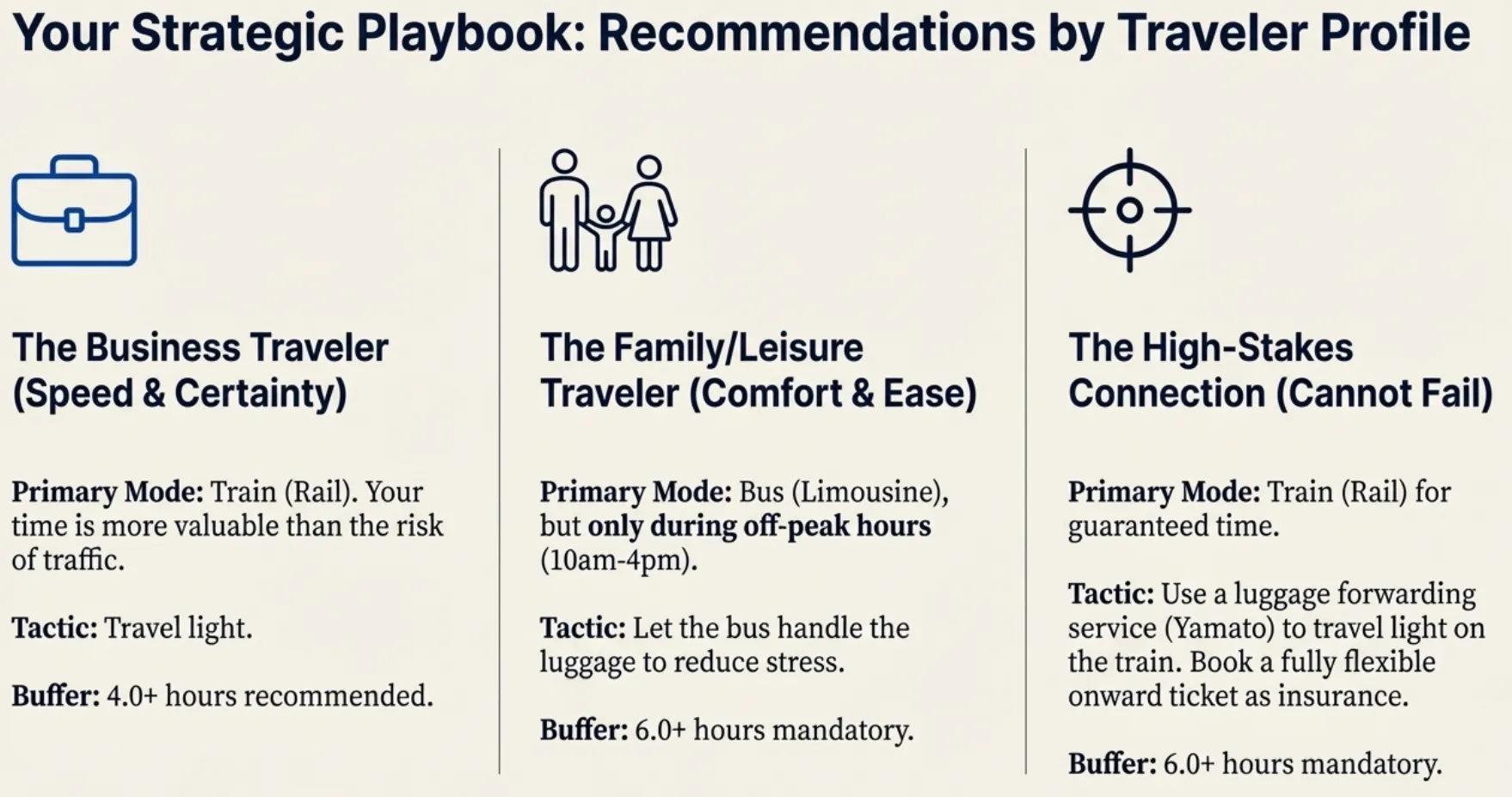
Making the Haneda-Narita transfer work for you
The key to a stress-free inter-airport connection isn't choosing between the train's reliability and the bus's convenience—it's being smart about how you travel. By forwarding your heavy luggage separately, you unlock the best of both worlds: Japan's punctual rail system and the freedom of traveling hands-free.
Here's what you'll want to remember: allow 5.5-6 hours minimum, use luggage forwarding to travel light, choose the train during rush hours, and always have your visa situation sorted before you fly. Do these things right, and what could be a stressful connection becomes a manageable part of your journey.
Need more help planning your Tokyo arrival? Check out our complete comparison of Haneda vs Narita airports to choose the right arrival point for your trip.
💡 Pro Tip: Bookmark this page or save the pre-travel checklist section for your trip. Many travelers print it out for peace of mind at the airport.